
A dish drying rack is an everyday utility product with a highly visible retail job: it needs to hold plates and glassware securely, manage water, protect the countertop, fit the intended kitchen space, and arrive with its finish and components intact. This guide helps buyers compare a dish drying racks manufacturer, evaluate wholesale dish drying racks, and prepare a private-label brief with real product application, factory testing, and shipment inspection in view.
1. The buyer's answer: how to approach dish drying racks manufacturer: wholesale and private label buyer guide
Choose a dish drying racks manufacturer by defining the kitchen routine and countertop constraints before selecting a visual style. A compact single-tier rack, an expandable rack, a plate-and-glass system, and a rack with a removable drip tray can have different material, weld, drainage, accessory, pack, and carton requirements. The initial brief should state target market, intended use, countertop footprint, set components, material and finish direction, target channel, quantity range, price position, retail-pack route, and delivery timing. Wholesale dish drying racks, dish drying racks supplier, dish drying racks manufacturer, private-label dish drying racks, custom dish drying racks, and OEM dish drying racks are commercial search terms rather than a specification. A credible supplier should show the selected metal or polymer route, weld or assembly construction, tray, utensil holder, feet, plate slots, finish, packaging, and inspection plan. That gives buyers a clear basis for comparing quotations and prevents a low price from masking a different construction. For a first retail range, give each format a distinct job. A compact rack can address limited counter space, a core rack can serve everyday dishwashing, and a larger or feature-led format can be a trade-up. This creates a clear choice for shoppers and keeps components, packaging, and replenishment manageable for the retailer.
The most reliable route is to make the buying decision visible before asking for a final price. State the target market, intended channel, product role, quantity range, and any non-negotiable requirement. This turns a broad catalogue request into a reviewable brief and gives both parties a clearer basis for sample, packing, and shipment preparation.
2. Build the commercial decision before comparing quotations
Ask every dish drying racks supplier to quote from one written brief. A comparable quotation should identify the body material and finish, plate-slot configuration, drip tray, utensil holder, feet, accessory count, product dimensions, unit pack, inner pack, master carton, quality scope, lead-time assumption, and delivery term. A lower wholesale price can result from thinner wire, different plating or coating, fewer protective parts, a simplified tray, or a different carton route. It should not be treated as equivalent until those assumptions are visible. Private-label dish drying racks can be differentiated through finish, colour accents, accessory configuration, logo placement, product grouping, and retail packaging. Confirm which custom changes affect tooling, wire forming, coating, component sourcing, print or artwork proofing, MOQ, lead time, and carton cube. The buyer should approve final claims and consumer information, while the manufacturer controls the selected product-and-pack version through production. Include freight and store operation in the comparison. A fully assembled rack may present strongly but consume more carton volume. A partly assembled design can improve packing efficiency but requires a clear installation preparation and component-control route. The best OEM decision balances customer setup, product stability, retail display, and landed cost rather than choosing only by unit price.
Compare like with like. A lower unit price can reflect a different material route, component set, pack configuration, carton quantity, or inspection scope. Ask suppliers to show the assumptions behind a quotation and retain the version with the selected option. That record is useful when the approved sample, shipment inspection, and invoice are reviewed later.
| Control point | Buyer decision | Evidence |
|---|---|---|
| Product route | Material, configuration, tray, accessories and intended use | Buyer brief and approved sample |
| Commercial comparison | Pack, carton, MOQ, lead time and delivery term | Aligned supplier quotation |
| Retail pack | Information, component control and product protection | Artwork proof and packing photos |
| Release | Fit, finish, set count and shipment condition | Factory testing and inspection record |
3. Define the product evidence a buyer should see
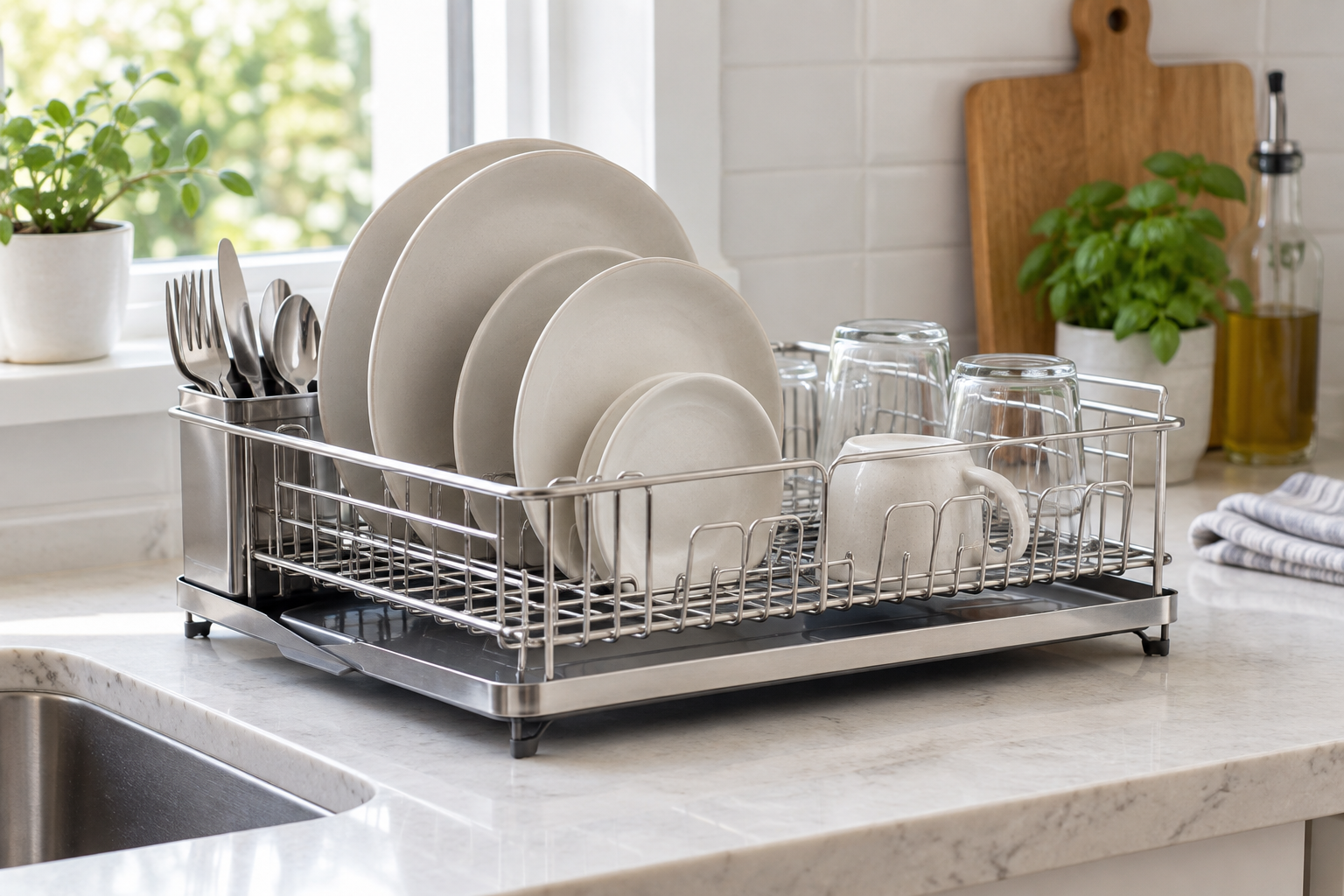
Record each working component: rack body, plate supports, glassware section, drip tray, cutlery caddy, feet, connectors, finish, decoration, and retail pack. Define nominal dimensions, selected material route, intended load arrangement, drainage direction, care route, colour or finish reference, component count, and the functions that must be checked on the buyer-approved sample. This gives a factory team inspectable requirements instead of generic premium-quality language. Review the actual rack in product application. Place representative plates, glasses, cups, and utensils in the selected positions, check stability, access, drainage path, tray fit, feet contact, component connections, and visible finish. A product photograph cannot fully reveal a rack that flexes, a tray that does not sit flat, or plate slots that do not match the intended use. The approved sample should capture these practical decisions. Use specific, supportable claims. State the selected material and configuration rather than broad statements about lasting forever or fitting every kitchen. Any claim about corrosion resistance, dishwasher use, or capacity should be reviewed against the exact finished product and intended use conditions before it appears on packaging.
Use the approved sample as a shared reference rather than relying on a product image alone. In practical factory testing, this means checking the visible parts, assembly, fit, moving components, count, and any agreed function against a documented reference. It is better to describe a limited, testable condition than to use a broad marketing claim that cannot be verified.
4. Make sample approval and factory checks specific
Agree factory testing and shipment inspection before mass production. Depending on the approved rack, useful checkpoints can include material and component identity, weld or connector condition, tray fit, feet, plate-slot alignment, accessory count, finish, visible edges, selected dimensions, retail-pack presentation, and export-carton protection. The checklist should follow the selected product version and not be copied from an unrelated kitchen storage item. Keep evidence at meaningful control points: approved sample photos, pre-production finish or component confirmation where needed, first packed-unit photos, finished product and carton photos, and inspection findings with corrective actions. If a finding requires rework, record the observation, action, recheck, and release decision. This gives buyers a transparent basis for shipment handover. During shipment preparation, confirm that wire structures, trays, feet, and loose accessories are protected and correctly identified. Dividers, sleeves, accessory bags, inner-pack counts, carton marks, and carton orientation should be agreed before the goods are released. These details protect both the visible finish and the customer’s first-use experience.
Before goods are complete, agree the inspection timing, the approved product and pack references, the critical functions, visible tolerances, and the action route if a finding needs correction. A factory quality check or third-party shipment inspection can then report against an agreed scope instead of making an improvised judgement on the day.

5. Treat retail packing and export packing as part of the product
Retail packaging should make the product format, component count, and selected installation or care information clear. Give the artwork adequate space for barcode data, origin information, market-specific copy, and only verified feature statements. A colour box, sleeve, or display pack should protect the tray, wire finish, and accessories while communicating the product’s use. For export packing, decide whether the rack ships assembled, partly assembled, or flat-packed. Confirm protective dividers, bags, accessory separation, inner-pack configuration, carton quantity, carton marks, and pallet requirements where applicable. A package that looks good on shelf is not enough if the wire finish rubs or components shift during international transport. Before dispatch, request photographs of the assembled product, all accessory components, retail pack, internal protection, inner pack, and master carton. This connects the buyer-approved retail version to the actual shipment and makes reordering more controlled.
Ask for a pre-production photo set before mass production is finished: the product in the retail pack, front and back panels, internal protection, barcode area, inner pack, and master carton. This simple record helps product, logistics, and buying teams identify a mismatch while there is still time to correct it.
6. Send a sourcing brief that earns a useful reply
Send DayMild the target market, intended kitchen use, reference products, countertop footprint, plate and glassware requirements, material and finish direction, estimated quantity, target price position, private-label needs, retail-pack route, delivery goal, and known retailer requirements. Tell us whether you need ready wholesale dish drying racks, a private-label range, or custom OEM development. Use the same brief when comparing suppliers so construction, component count, packing, quality scope, and delivery assumptions can be evaluated consistently. Browse the kitchen and storage product catalogue, private-label cleaning products sourcing checklist, and homeware product specification sheet guide for related planning. Send your requirements with the market, quantity range, and delivery window. DayMild will respond with relevant product options and the next sample, packaging, and inspection decisions to settle before production.
A short, honest first brief is enough to start. DayMild can help buyers translate a category idea into a product, packaging, and quality discussion. Browse our DayMild kitchen and storage products to see relevant formats, then send the destination market, target quantity, preferred delivery window, and the questions your team needs answered.
Frequently asked questions
What should I ask a dish drying racks manufacturer before requesting a quote?
Share the target market, intended kitchen use, countertop dimensions, product configuration, material and finish direction, quantity range, target price, pack route, delivery timing, and any known retailer requirements.
How do I compare wholesale dish drying racks fairly?
Use one written brief and compare material and finish, rack configuration, tray and accessory set, retail pack, carton quantity, quality scope, lead time, delivery term, and supplier assumptions before comparing price.
Can a supplier make private-label dish drying racks?
A supplier may support buyer-approved finishes, logo placement, accessory options, packaging, and selected configurations. Confirm tooling, artwork proofing, MOQ, product claims, installation information, and export protection before production.
What should dish drying rack shipment inspection check?
The agreed plan can include product identity, weld or connector condition, tray and foot fit, component count, visible finish, selected dimensions, retail-pack condition, carton protection, and required markings against the buyer-approved reference.
How can I start a homeware sourcing enquiry?
Send DayMild the product category, target market, estimated quantity, pack requirements, timeline, and the most important buying questions. We will help identify the next product, packing, and quality decisions to review.
Conclusion: make the handoff clear before production
Good homeware sourcing is not about asking a supplier to promise everything. It is about defining the product, retail presentation, and inspection evidence that matter for the selected market. The clearer the approved brief, the more useful the quote, sample review, factory testing, and shipment handoff become.
When you are ready, get a dish drying rack quote with your category, market, and buying priorities. DayMild will respond with relevant product options and the next practical questions.