
A dish drying mat is a simple-looking kitchen textile, but its commercial result depends on the fibre construction, absorbency, edge finish, drying behaviour, size, care guidance, retail pack, and carton protection. This guide helps buyers compare a dish drying mats manufacturer, assess wholesale dish drying mats, and prepare a private-label brief with real product application, factory testing, and shipment inspection in view.
1. The buyer's answer: how to approach dish drying mats manufacturer: wholesale and private label buyer guide
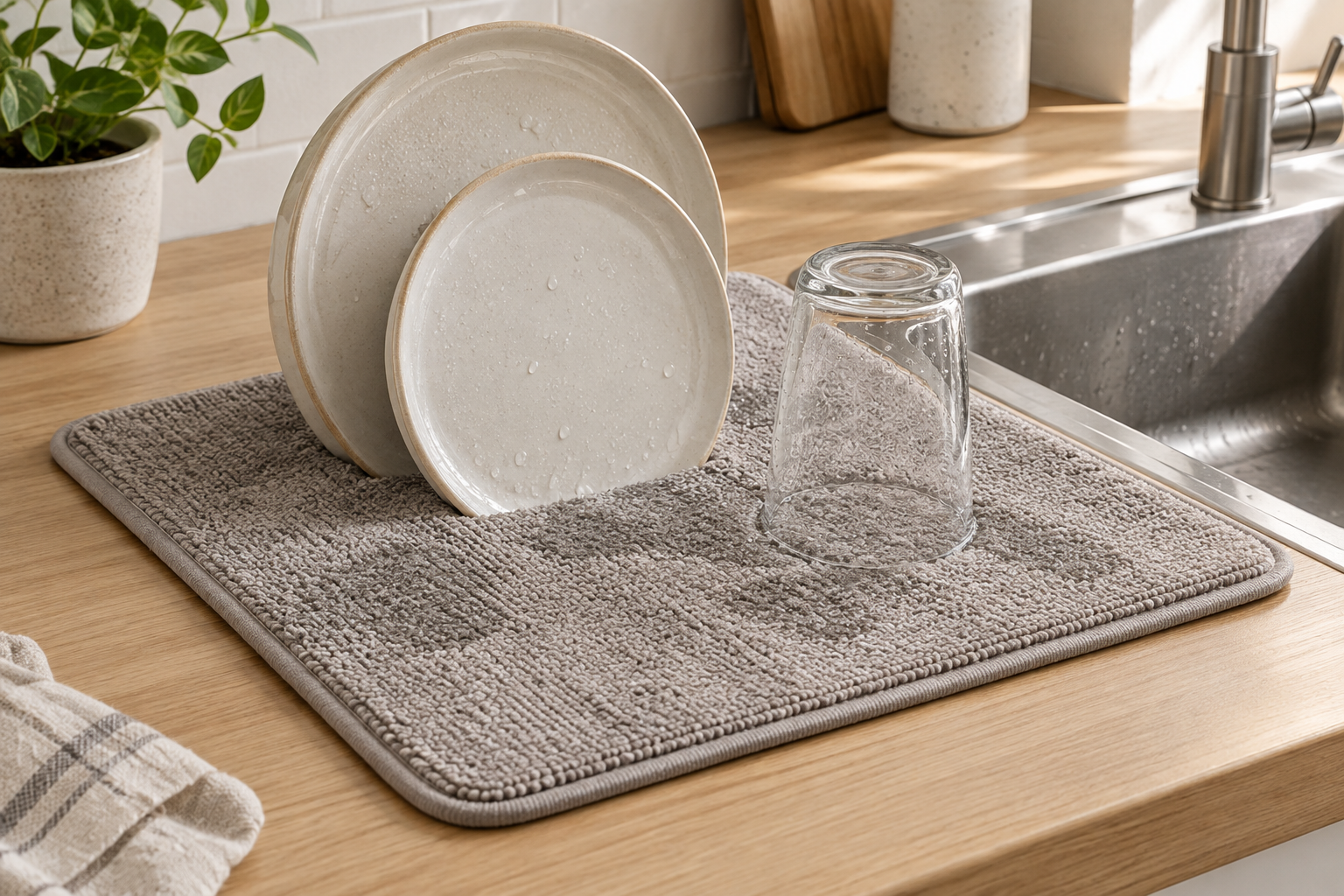
Choose a dish drying mats manufacturer by defining the kitchen task and retailer position before selecting a pattern or colour. A compact sink-side mat, a larger draining mat for dishes and glassware, a padded mat for fragile items, or a coordinated cleaning-textile set can need different face fabric, absorbent layer, backing, quilting, dimensions, edge binding, care route, and packaging. The initial brief should state target market, intended use, material direction, dimensions, colour or print route, channel, quantity range, target price position, retail pack, and delivery timing. Wholesale dish drying mats, dish drying mats supplier, dish drying mats manufacturer, private-label dish drying mats, custom dish drying mats, and OEM dish drying mats are commercial descriptions rather than a complete product specification. A credible supplier should identify the fabric and layer construction, GSM or weight direction where relevant, backing, stitching or binding, dimensions, shrinkage and care assumptions, decoration, unit pack, carton plan, and inspection points. This lets buyers compare true product routes instead of treating similarly photographed textiles as identical. For a first retail range, give each SKU a clear role. A compact neutral everyday mat, a higher-absorbency core format, and a giftable or coordinated kitchen-textile set can make a workable price ladder. Each format should solve a distinct customer task and avoid multiplying colours without a shelf reason.
The most reliable route is to make the buying decision visible before asking for a final price. State the target market, intended channel, product role, quantity range, and any non-negotiable requirement. This turns a broad catalogue request into a reviewable brief and gives both parties a clearer basis for sample, packing, and shipment preparation.
2. Build the commercial decision before comparing quotations
Ask every dish drying mats supplier to quote from the same written brief. A comparable offer should state fibre and construction, dimensions, face and backing route, edge finish, decoration, unit pack, inner pack, master carton, quality scope, lead-time assumption, and delivery term. A lower price can result from a lighter material, simplified stitching, different backing, reduced packaging, or a changed carton route; it should not be considered like-for-like until those differences are visible. Private-label dish drying mats are commonly differentiated by colour palette, weave or quilting appearance, contrast binding, size, set composition, printed care information, packaging, and brand artwork. Confirm which custom dish drying mats changes affect fabric availability, printing, sample approval, MOQ, lead time, colour consistency, or packing efficiency. The buyer should approve retail claims and destination-market care copy, while the manufacturer maintains the approved product-and-pack version through production. Include freight and shelf presentation in the decision. A thick, padded textile can elevate perceived value but uses more cube and may need a different folding route. A compact banded pack can support a lower price point but must still keep the product clean and easy to understand. The best OEM choice balances absorbency, drying practicality, retail clarity, and export cost rather than focusing on fabric cost alone.
Compare like with like. A lower unit price can reflect a different material route, component set, pack configuration, carton quantity, or inspection scope. Ask suppliers to show the assumptions behind a quotation and retain the version with the selected option. That record is useful when the approved sample, shipment inspection, and invoice are reviewed later.
| Review point | Buyer decision | Evidence |
|---|---|---|
| Product role | Dish-draining task, size, thickness and set role | Buyer brief and approved sample |
| Textile system | Face fabric, absorbent layer, backing, binding and care | Specification and material record |
| Packing | Fold, retail information, protection, inner pack and carton | Artwork proof and packing photos |
| Release | Dimensions, finish, absorbency check and shipment condition | Factory testing and inspection record |
3. Define the product evidence a buyer should see
Document the complete textile system: face material, absorbent layer, backing if used, quilting or lamination route, edge binding, thread, dimensions, weight or construction direction, colour or print reference, fold method, label location, care route, and retail pack. Record the intended task: temporary drainage after hand washing, protecting a countertop under dishes, or holding glassware while it dries. This turns a broad absorbency promise into a buyer-approved product record. Review samples in product application. Wet a controlled area, place representative dishes and a glass on the surface, observe stability and visible moisture spread, then assess handling, seam and binding appearance, fold recovery, and selected care instructions. This is not a substitute for formal laboratory testing, but it is a practical factory testing checkpoint that can reveal construction differences before production. Avoid unsupported claims such as fully waterproof, antibacterial, or permanently stain-proof unless the exact finished product and evidence support that wording. For a material comparison, ask whether the supplier is quoting a microfibre, cotton-blend, polyester, foam-padded, or layered construction, and how the finished mat is expected to be washed and dried. A meaningful sample review looks at the whole format—surface feel, absorbency, edge durability, dimensions, fold, care, and pack—not just a fabric swatch.
Use the approved sample as a shared reference rather than relying on a product image alone. In practical factory testing, this means checking the visible parts, assembly, fit, moving components, count, and any agreed function against a documented reference. It is better to describe a limited, testable condition than to use a broad marketing claim that cannot be verified.
4. Make sample approval and factory checks specific
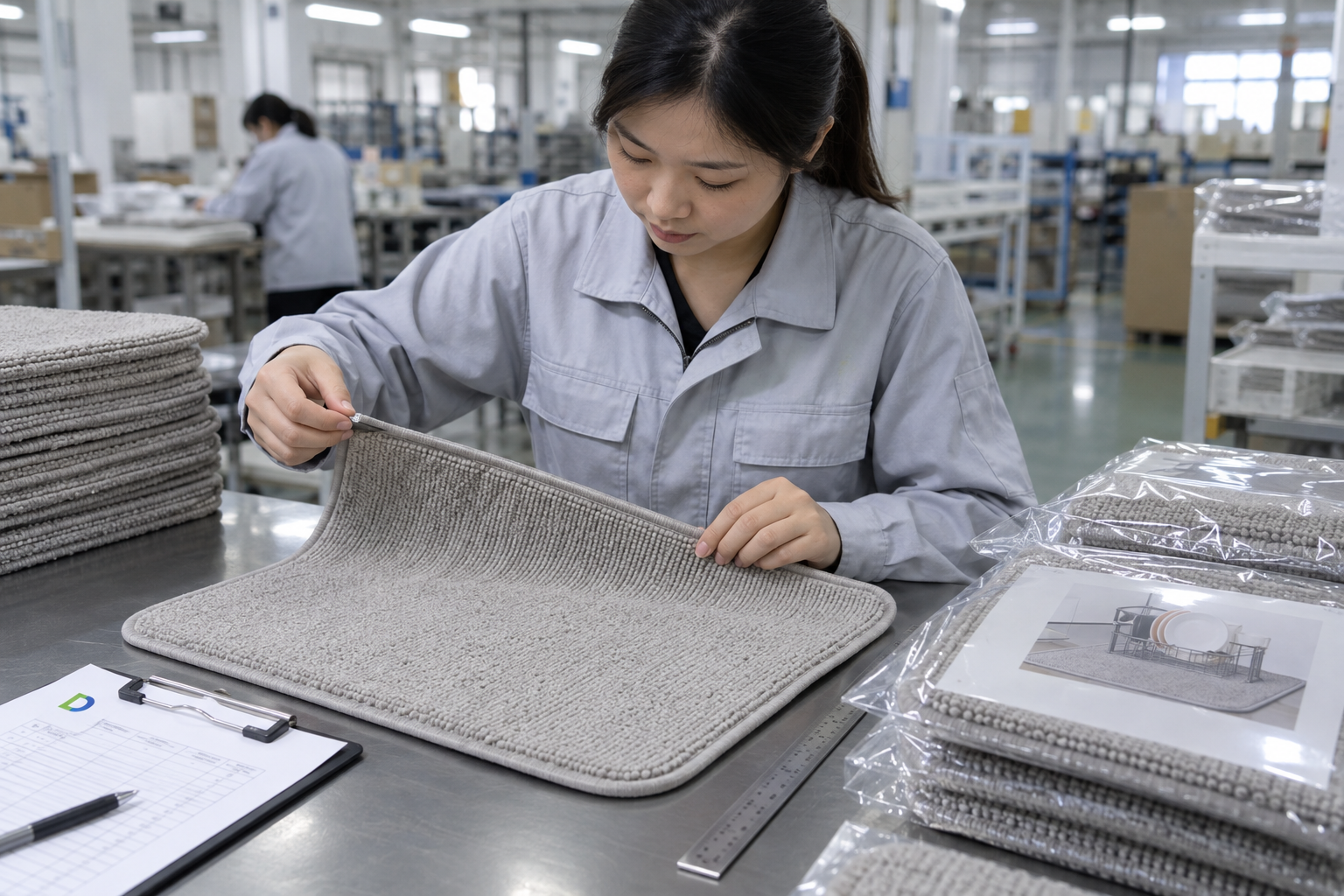
Agree factory testing and shipment inspection before mass production. Depending on the selected mat, useful checks can include material and colour identity, key dimensions, edge-stitch consistency, visible surface condition, fold method, selected absorbency demonstration, care-label placement, retail-pack presentation, unit count, and master-carton protection. The inspection plan should follow the buyer-approved textile construction, not a generic kitchenware checklist. Keep evidence at practical control points: approved sample photos, colour or print confirmation where required, in-process stitching or binding photos, packed-unit photos, finished product and carton photos, and inspection findings with corrective actions. If fabric, print, dimensions, pack, or care copy changes, record the revision and approval owner before release. This gives purchasing, quality, and logistics teams a shared release reference. During shipment preparation, confirm that folded mats are protected from moisture, dust, transfer marks, and compression damage. Check unit-pack count, inserts or bands, inner-pack configuration, carton marks, carton quantity, and pallet instructions where relevant. A textile can pass a visual sample review yet arrive poorly if folding, pack, or carton moisture protection is not controlled.
Before goods are complete, agree the inspection timing, the approved product and pack references, the critical functions, visible tolerances, and the action route if a finding needs correction. A factory quality check or third-party shipment inspection can then report against an agreed scope instead of making an improvised judgement on the day.
5. Treat retail packing and export packing as part of the product
Retail packaging should show the product size, selected material story, set content, and approved care information without unsupported performance promises. Reserve space for barcode data, country-of-origin wording, market-specific copy, and verified product facts. A paper band, sleeve, belly band, card, or colour box should keep the mat clean, folded to the intended presentation, and protected from handling. For export packing, review the folding template, orientation, polybag or protective paper route where selected, inner-pack count, carton quantity, carton marks, moisture protection, and pallet pattern. Repeating the fold and pack method at the sample stage helps prevent inconsistent shelf presentation. Before dispatch, request photos of the opened mat, edge finish, care label, folded retail pack, internal protection, inner pack, master carton, and carton markings. This connects the buyer-approved retail version to the actual shipment inspection record.
Ask for a pre-production photo set before mass production is finished: the product in the retail pack, front and back panels, internal protection, barcode area, inner pack, and master carton. This simple record helps product, logistics, and buying teams identify a mismatch while there is still time to correct it.
6. Send a sourcing brief that earns a useful reply
Send DayMild the target market, intended kitchen task, reference products, material and thickness direction, preferred dimensions, colour or print preference, expected quantity, target price position, private-label requirements, retail-pack route, delivery goal, and known retailer requirements. Tell us whether you need ready wholesale dish drying mats, a private-label range, or custom OEM development. Use the same brief when comparing suppliers so textile construction, pack, quality scope, and delivery assumptions can be evaluated consistently. Browse the dish drying rack buyer guide, Kitchen & Storage catalogue, and private-label cleaning products sourcing checklist for related range planning. Send your requirements with the market, quantity range, and delivery target. DayMild will respond with relevant material and pack options plus the next sample, quality, and shipment questions to settle before production.
A short, honest first brief is enough to start. DayMild can help buyers translate a category idea into a product, packaging, and quality discussion. Browse our DayMild kitchen and cleaning formats to see relevant formats, then send the destination market, target quantity, preferred delivery window, and the questions your team needs answered.
Frequently asked questions
What should I ask a dish drying mats manufacturer before requesting a quote?
Share the target market, intended kitchen task, material and dimension direction, colour or print needs, quantity range, target price, pack route, delivery timing, and known retailer requirements.
How should I compare wholesale dish drying mats?
Use one written brief and compare fabric and layer construction, dimensions, backing, edge finish, care route, retail pack, carton quantity, quality scope, lead time, delivery term, and supplier assumptions before comparing price.
Can a supplier make private-label dish drying mats?
A supplier may support buyer-approved colour, print, dimensions, binding, packaging, and brand artwork. Confirm material availability, print approval, MOQ, care information, colour control, and export protection before production.
What should dish drying mat shipment inspection check?
The agreed plan can include material and colour identity, dimensions, edge finish, surface appearance, fold, care-label placement, retail-pack condition, carton protection, and required markings against the buyer-approved reference.
How can I start a homeware sourcing enquiry?
Send DayMild the product category, target market, estimated quantity, pack requirements, timeline, and the most important buying questions. We will help identify the next product, packing, and quality decisions to review.
Conclusion: make the handoff clear before production
Good homeware sourcing is not about asking a supplier to promise everything. It is about defining the product, retail presentation, and inspection evidence that matter for the selected market. The clearer the approved brief, the more useful the quote, sample review, factory testing, and shipment handoff become.
When you are ready, get a dish drying mat quote with your category, market, and buying priorities. DayMild will respond with relevant product options and the next practical questions.