
Private-label laundry hampers are a product-and-pack system: fabric or rigid body, frame or board, lid, liner, handles, folds, customer assembly, retail information, export protection, and carton efficiency must work together. This guide helps buyers plan a retail-ready launch with a laundry hampers supplier while keeping product application, factory testing, and shipment inspection visible from the start.
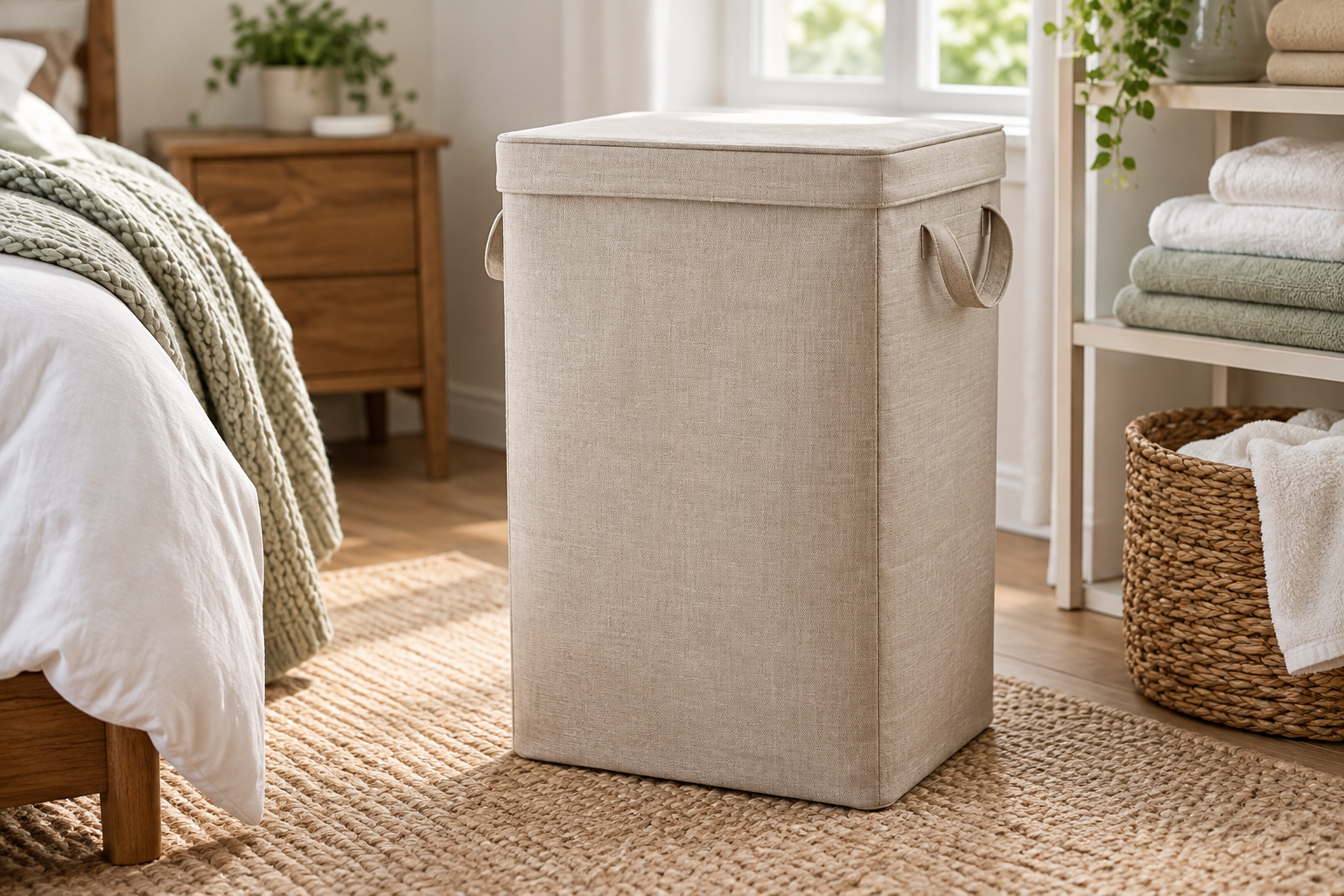
1. The buyer's answer: how to approach private label laundry hampers: packaging and launch guide for retail buyers
Begin private-label laundry hamper development by defining the customer use route. A bedroom hamper, family laundry sorter, compact apartment solution, bathroom format, collapsible basket, or lidded fabric unit can need different dimensions, capacity, construction, liner, handle, lid, fold, assembly, material, and pack routes. The first brief should state target market, intended room and user, size and capacity direction, material and finish preference, channel, quantity range, target price position, retail pack, delivery target, and known retailer requirements. Private label laundry hampers, laundry hampers packaging supplier, wholesale laundry hampers, laundry hampers supplier, custom laundry hampers, and OEM laundry hampers are useful commercial terms, but a successful launch needs a product-specific definition. A dependable supplier should identify the body material, base and support route, lid, liner, handles, hardware, dimensions, fold or assembly method, decoration, care information, unit pack, carton plan, and agreed quality controls. For a first range, create clear roles rather than a large set of lightly differentiated colours. A compact daily hamper, a core lidded bedroom format, and a divided or larger family unit can form an understandable price ladder. Every SKU should have a clear storage task, a supportable capacity description, and a pack route that protects it through retail and export handling.
The most reliable route is to make the buying decision visible before asking for a final price. State the target market, intended channel, product role, quantity range, and any non-negotiable requirement. This turns a broad catalogue request into a reviewable brief and gives both parties a clearer basis for sample, packing, and shipment preparation.
2. Build the commercial decision before comparing quotations
Ask each laundry hampers supplier to quote from the same written brief. A comparable quotation should state overall and usable dimensions, material and board or frame construction, lid and liner route, handle details, fold or assembly method, decoration, unit pack, inner pack, master carton, stated MOQ basis, quality scope, lead-time assumption, and delivery term. A lower price may come from lighter fabric, simpler boards, reduced liner, smaller dimensions, different folding, or less carton protection; it is not equivalent until these assumptions are recorded. Private-label choices often affect both the product and the carton. A new fabric colour, contrast trim, printed liner, embroidery, special handle, removable divider, rigid insert, or colour box can change material supply, cutting, sewing, proofing, MOQ, lead time, and cube. Confirm which elements are stock options and which require custom production. The buyer should control final brand, consumer claims, and destination-market information; the manufacturer should hold the approved product-and-pack version through production. Launch economics should include retailer handling and shipping. A tall assembled hamper can give a strong shelf presence but use more volume. A fold-flat hamper can improve container utilization but relies on clear instructions and reliable shape recovery. The strongest OEM route balances customer usability, shelf presentation, damage risk, return risk, and freight rather than selecting by fabric cost alone.
Compare like with like. A lower unit price can reflect a different material route, component set, pack configuration, carton quantity, or inspection scope. Ask suppliers to show the assumptions behind a quotation and retain the version with the selected option. That record is useful when the approved sample, shipment inspection, and invoice are reviewed later.
| Launch area | Buyer decision | Evidence |
|---|---|---|
| Product role | Room use, capacity direction, lid, liner, divider and handle route | Buyer brief and approved sample |
| Construction | Fabric, boards or frame, base, seams, fold and assembly | Specification and factory test record |
| Packaging | Retail information, component pairing, fold, protection and carton | Packed sample and carton plan |
| Release | Finish, fit, component count and shipment condition | Shipment inspection record |
3. Define the product evidence a buyer should see
Document the complete product system: outer body, lining, support boards or frame, base, lid, hinges or hook-and-loop where selected, handles, dividers, removable liner, dimensions, usable capacity direction, fabric and colour reference, fold or assembly method, label placement, care guidance, instructions, retail pack, and export pack. State the intended storage contents and room use. This makes the product application testable instead of relying on a capacity claim alone. Review samples with representative laundry loads or suitable textile substitutes. Check shape retention, base support, handle attachment, lid action, divider or liner fit, seams, edges, fold recovery, stability, and the ease of customer assembly. This is practical installation preparation and factory testing, not a reason to claim that every product will carry unlimited weight. Claims such as heavy duty, extra-large, or odour proof should only be used when the exact product and evidence support the wording. When comparing material routes, ask how the fabric, board, frame, liner, and seams behave together after folding and packing. A material swatch cannot show whether a tall hamper stays upright, a lid remains aligned, or an insert survives transit. The buyer-approved sample should include the selected product construction and the intended retail pack.
Use the approved sample as a shared reference rather than relying on a product image alone. In practical factory testing, this means checking the visible parts, assembly, fit, moving components, count, and any agreed function against a documented reference. It is better to describe a limited, testable condition than to use a broad marketing claim that cannot be verified.
4. Make sample approval and factory checks specific
Agree quality checks before production. Depending on the approved hamper, useful points include material and colour identity, key dimensions, seams and binding, board or frame fit, base support, handles, lid and liner operation, divider count, fold or assembly route, visible appearance, retail-pack condition, inner-pack count, and master-carton protection. The inspection plan should follow the selected construction and current approved sample. Use a staged release process. Confirm pre-production fabric, trim, components, colour, product and packaging artwork, and instructions. Review in-process sewing or assembly and component pairing. Then conduct finished-product and shipment inspection. Keep evidence such as approved sample photos, colour or material confirmations, production photos, packed-unit photos, carton photos, inspection findings, and corrective actions. Record any change in fabric, board, lid, liner, pack, or instruction with a revision and approval owner. During shipment preparation, make sure all inserts, lids, liners, dividers, and instructions remain paired to the intended unit. Check fold direction, protective bags or paper, carton reinforcement, inner-pack count, carton marks, carton quantity, and pallet plan where relevant. A hamper can look correct on an open sample but arrive poorly if its internal supports, lid, or folded presentation are not protected.
Before goods are complete, agree the inspection timing, the approved product and pack references, the critical functions, visible tolerances, and the action route if a finding needs correction. A factory quality check or third-party shipment inspection can then report against an agreed scope instead of making an improvised judgement on the day.

5. Treat retail packing and export packing as part of the product
Laundry hampers packaging requirements should keep the product clean, complete, and recognizable at retail. A belly band, sleeve, card, bag, or colour box needs verified dimensions, set content, care information, assembly guidance, barcode data, country-of-origin wording, and market-specific copy where appropriate. It should also hold boards, liners, handles, and instructions in their intended relationship. For a flat-pack route, approve a folding template and packed sample before final artwork. Review how boards are inserted, whether a lid or liner moves, whether corners are protected, how the product opens after shipping, inner-pack configuration, carton cube, and the protection needed for the intended route. A private-label pack should be as repeatable for a later reorder as it is attractive for a product photograph. Before dispatch, request photos of the opened hamper, seams and handles, lid and liner or divider, folded retail pack, instruction placement, internal protection, inner pack, master carton, and carton marks. Tie these images to the shipment inspection record so the buyer has an evidence-based release file.
Ask for a pre-production photo set before mass production is finished: the product in the retail pack, front and back panels, internal protection, barcode area, inner pack, and master carton. This simple record helps product, logistics, and buying teams identify a mismatch while there is still time to correct it.
6. Send a sourcing brief that earns a useful reply
Send DayMild the target market, intended room and customer, reference products, dimensions and capacity direction, fabric and construction preference, expected quantity, target price position, private-label artwork needs, packaging route, delivery goal, and known retailer requirements. Tell us whether you need ready wholesale laundry hampers, a branded private-label range, or custom OEM development. Use the same brief when comparing suppliers so construction, pack, quality scope, and delivery assumptions can be evaluated consistently. Browse the laundry hampers manufacturer buyer guide, collapsible laundry baskets buyer guide, and private-label home organization products for related planning. Send your requirements with the market, quantity range, preferred product route, and delivery target. DayMild will respond with relevant product and packaging options plus the next sample, testing, and inspection questions to settle before production.
A short, honest first brief is enough to start. DayMild can help buyers translate a category idea into a product, packaging, and quality discussion. Browse our DayMild home organization formats to see relevant formats, then send the destination market, target quantity, preferred delivery window, and the questions your team needs answered.
Frequently asked questions
What should I tell a private-label laundry hamper supplier before requesting a quote?
Share the target market, intended room and user, product dimensions and capacity direction, construction and material route, quantity range, target price, branding, pack route, delivery timing, and retailer requirements.
How should I compare wholesale laundry hampers?
Use one written brief and compare material, support boards or frame, liner and lid, handles, dimensions, fold or assembly, retail pack, carton quantity, quality scope, lead time, delivery term, and supplier assumptions before comparing price.
Why is a packed sample important for a laundry hamper?
It shows whether boards, lids, liners, dividers, instructions, and visible surfaces remain controlled during export. It also confirms folded dimensions, carton efficiency, and shelf-ready presentation.
What should laundry hamper shipment inspection check?
Check the buyer-approved material and colour, dimensions, seams, handles, boards or frame, lid and liner fit, fold, set count, retail-pack condition, carton protection, and required markings.
How can I start a homeware sourcing enquiry?
Send DayMild the product category, target market, estimated quantity, pack requirements, timeline, and the most important buying questions. We will help identify the next product, packing, and quality decisions to review.
Conclusion: make the handoff clear before production
Good homeware sourcing is not about asking a supplier to promise everything. It is about defining the product, retail presentation, and inspection evidence that matter for the selected market. The clearer the approved brief, the more useful the quote, sample review, factory testing, and shipment handoff become.
When you are ready, plan your private-label hamper range with your category, market, and buying priorities. DayMild will respond with relevant product options and the next practical questions.