
Fridge organization products are sold for visibility, access, and a calmer food-storage routine, but they also need to stack, fit familiar refrigerator zones, protect clear surfaces, and arrive as a countable retail range. This guide helps buyers compare a fridge organizers manufacturer, evaluate wholesale fridge organizers, and prepare a private-label brief with product application, packing, and shipment inspection in view.
1. The buyer's answer: how to approach fridge organizers manufacturer: wholesale and private label buyer guide
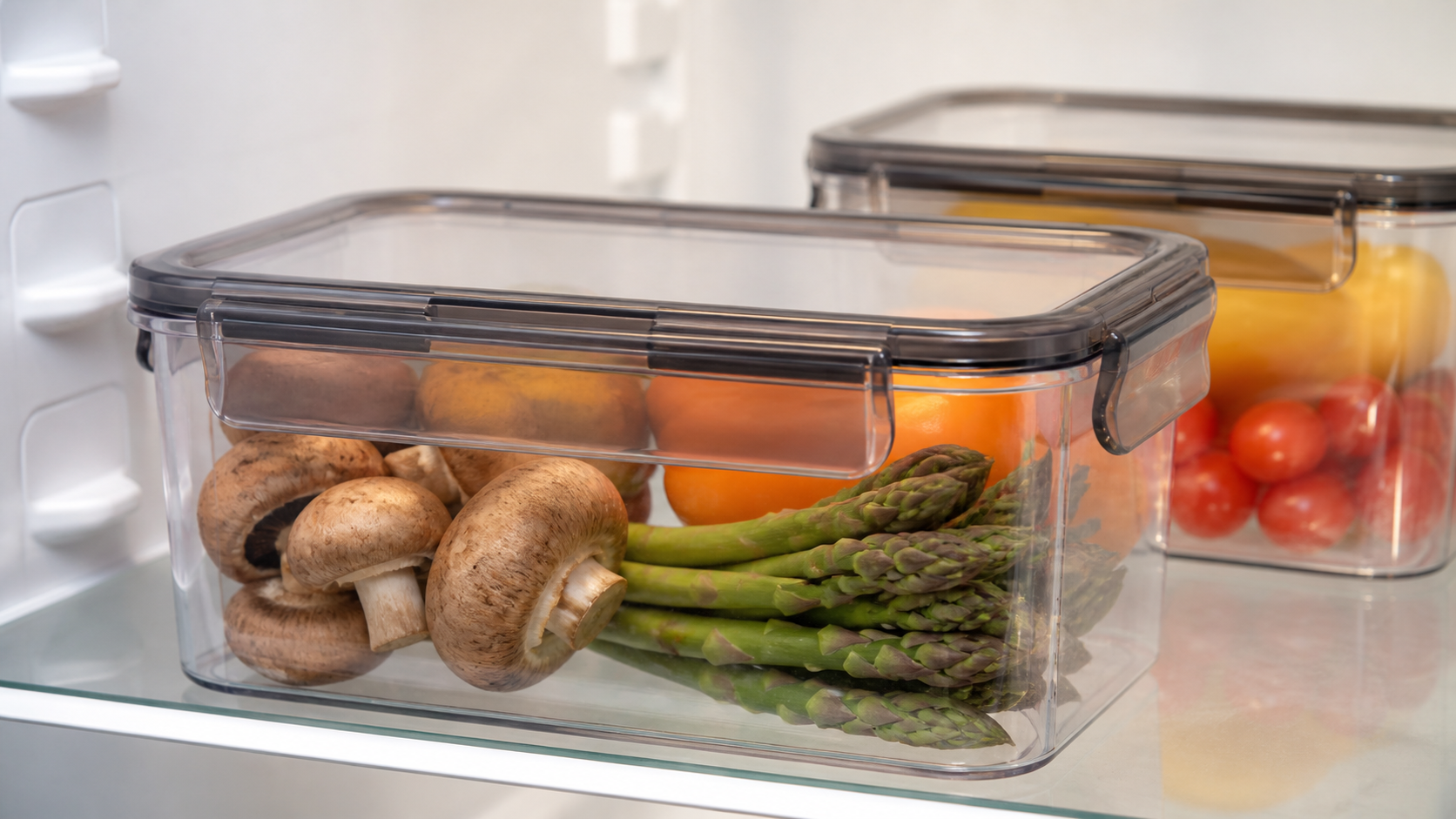
Choose a fridge organizers manufacturer by mapping the refrigerator zones the range is meant to improve. Produce drawers, beverage shelves, snack areas, leftover storage, and door shelves create different footprint, height, handle, lid, stackability, and cleaning requirements. The first brief should state target market, intended zone, product role, approximate dimensions, material direction, use and cleaning assumptions, target channel, quantity range, price position, pack route, and delivery timing. Wholesale fridge organizers, fridge organizers supplier, fridge organizers manufacturer, private-label fridge organizers, custom fridge organizers, and OEM fridge organizers are commercial search terms rather than a product specification. A supplier should make the selected body, lid or divider components, dimensions, clear-view finish, retail pack, carton route, and quality scope visible. This lets buyers compare the actual options rather than assuming that two transparent bins are equivalent. Start a first range with clearly distinct roles: a general open bin, a lidded format for stackable storage, and a narrower category-specific organiser can create a useful entry, core, and trade-up choice. Each SKU should earn its shelf place through a defined use moment, not simply add another clear plastic shape to the assortment.
The most reliable route is to make the buying decision visible before asking for a final price. State the target market, intended channel, product role, quantity range, and any non-negotiable requirement. This turns a broad catalogue request into a reviewable brief and gives both parties a clearer basis for sample, packing, and shipment preparation.
2. Build the commercial decision before comparing quotations
Request quotations from each fridge organizers supplier against the same written brief. A comparable proposal should identify body and lid material route, handles, dividers, feet, stack relationship, dimensions, colour or transparency specification, unit pack, inner pack, master carton, lead-time assumption, quality scope, and delivery term. The unit price can change materially with wall construction, lid geometry, protective packing, set count, or carton density, so price alone is not a sound selection tool. Private-label fridge organizers are often differentiated by coordinated dimensions, selected colour accents, packaging, labels, and range architecture. Confirm which custom fridge organizers changes need a new tool, special component sourcing, colour matching, new artwork, additional MOQ, or a different carton plan. The buyer should approve final packaging information and market-specific claims; the manufacturer should document the approved product-and-pack version for production. Include freight and store operation in the commercial decision. Large clear bins can create a strong product story but occupy more carton cube. Nested formats can improve shipping efficiency but must separate cleanly and remain identifiable at receiving. A lidded set may support stacking but adds components and closure checks. The best OEM route balances shopper use, display logic, retail price, carton efficiency, and control points.
Compare like with like. A lower unit price can reflect a different material route, component set, pack configuration, carton quantity, or inspection scope. Ask suppliers to show the assumptions behind a quotation and retain the version with the selected option. That record is useful when the approved sample, shipment inspection, and invoice are reviewed later.
| Decision area | Buyer choice | Evidence |
|---|---|---|
| Product role | Fridge zone, access route, size and components | Buyer brief and approved sample |
| Commercial comparison | Material, pack, carton, lead time and delivery term | Aligned supplier quotation |
| Retail and export pack | Information, protection, inner-pack and carton route | Artwork proof and packing photos |
| Release | Fit, finish, set count and carton condition | Factory testing and shipment inspection |
3. Define the product evidence a buyer should see
Record the product as a collection of visible and functional parts. A lidded fridge organizer may include body, lid, handle, feet, divider, stack features, label zone, and decoration. Specify nominal exterior and usable dimensions where relevant, material direction, intended refrigerator zone, cleaning guidance, colour reference, component count, and any selected stack or access function. The buyer-approved sample should show the selected product in the intended orientation. Review a physical sample in product application. Check whether the organiser fits its expected zone, whether handles offer practical access, whether lids pair correctly with bodies, whether dividers remain in place, whether stacking is stable as specified, and whether the product remains readable and attractive in its retail pack. Product photographs cannot fully show component fit, surface quality, or the practical effect of an awkward handle or lid. Avoid claims that cannot be checked against the actual product. Instead of describing a bin as universally durable or perfect for every refrigerator, define its intended use, dimensions, components, cleaning route, and visible standard. These details can be reviewed in factory testing and shipment inspection and are more credible for retail copy.
Use the approved sample as a shared reference rather than relying on a product image alone. In practical factory testing, this means checking the visible parts, assembly, fit, moving components, count, and any agreed function against a documented reference. It is better to describe a limited, testable condition than to use a broad marketing claim that cannot be verified.
4. Make sample approval and factory checks specific
Agree the factory testing and shipment inspection scope before mass production. Depending on the approved product, useful checkpoints can include body and lid pairing, handle fit, divider fit, stacking or nesting relationship, visible surface condition, key dimensions, component and set count, retail-pack presentation, and master-carton protection. The checklist should be specific to the selected fridge organizer, not copied from a food container or open basket. Keep evidence at practical control points: approved-sample photos, component or colour confirmation where necessary, packed-unit photos, finished product and carton photos, and inspection findings with corrective action. If a version changes, record what changed and who approved it. This gives purchasing, quality, and logistics teams a clear reference at shipment handover and for the next reorder. Clear plastic surfaces and closely related sizes deserve special attention during packing. Confirm separators, protective sleeves or bags where selected, inner-pack identifiers, carton marks, and the carton orientation before goods are released. These controls help prevent scuffs, mismatched lids, and variant mix-ups during consolidation and receiving.
Before goods are complete, agree the inspection timing, the approved product and pack references, the critical functions, visible tolerances, and the action route if a finding needs correction. A factory quality check or third-party shipment inspection can then report against an agreed scope instead of making an improvised judgement on the day.

5. Treat retail packing and export packing as part of the product
Retail packaging should tell the shopper what the organiser does without making unsupported promises. Make the product format, selected size or capacity where relevant, set contents, care information, and approved features easy to find. Reserve space for barcode data, country-of-origin information, and market-specific wording supplied by the buyer. The chosen sleeve, card, or box must protect the clear product as well as communicate it. Export packing has different goals: hold components together, prevent surface damage, control carton cube, and support accurate receiving. Confirm product orientation, internal protection, inner-pack count, master-carton quantity, carton markings, and pallet requirements where relevant. A product may look well presented in a retail sleeve but still require dividers or additional protection for an international shipment. Before dispatch, ask for photos of the finished organiser, all lid or divider components, retail pack, inner pack, internal protection, and master carton. This simple record connects the approved retail version to the shipped product.
Ask for a pre-production photo set before mass production is finished: the product in the retail pack, front and back panels, internal protection, barcode area, inner pack, and master carton. This simple record helps product, logistics, and buying teams identify a mismatch while there is still time to correct it.
6. Send a sourcing brief that earns a useful reply
Send DayMild the target market, refrigerator zones, reference products, size direction, material and colour preference, lidded or open format, estimated quantity, target price position, private-label requirements, packaging route, delivery goal, and known retailer instructions. Tell us whether you need ready wholesale fridge organizers, a private-label range, or custom OEM development. Use a consistent brief when comparing suppliers so material, component, pack, quality, and delivery assumptions can be reviewed fairly. Browse the Clip-Lid Fridge Bin, Modular Pantry Storage Set, and food storage container sourcing guide for related planning. Send your requirements with the market, quantity range, and planned delivery. DayMild will respond with relevant formats and the next specification, packaging, and quality questions to settle before sampling.
A short, honest first brief is enough to start. DayMild can help buyers translate a category idea into a product, packaging, and quality discussion. Browse our DayMild kitchen and storage products to see relevant formats, then send the destination market, target quantity, preferred delivery window, and the questions your team needs answered.
Frequently asked questions
What should I ask a fridge organizers manufacturer before requesting a quote?
Share the target market, intended refrigerator zone, product format, approximate dimensions, material direction, expected quantity, target price position, pack route, delivery timing, and known retailer requirements.
How do I compare wholesale fridge organizers fairly?
Use one written brief and compare body and component construction, dimensions, set count, retail pack, carton quantity, quality scope, lead time, delivery term, and supplier assumptions before comparing unit prices.
Can a supplier create private-label fridge organizers?
A supplier may support buyer-approved colour details, packaging, labels, and selected product configurations. Confirm artwork proofing, component route, MOQ implications, and export protection before production.
What should be checked during fridge organizer shipment inspection?
The agreed plan can include product identity, component fit, surface condition, stacking or nesting action where applicable, set count, key dimensions, retail-pack condition, carton protection, and required markings against the approved reference.
How can I start a homeware sourcing enquiry?
Send DayMild the product category, target market, estimated quantity, pack requirements, timeline, and the most important buying questions. We will help identify the next product, packing, and quality decisions to review.
Conclusion: make the handoff clear before production
Good homeware sourcing is not about asking a supplier to promise everything. It is about defining the product, retail presentation, and inspection evidence that matter for the selected market. The clearer the approved brief, the more useful the quote, sample review, factory testing, and shipment handoff become.
When you are ready, get a fridge organizer quote with your category, market, and buying priorities. DayMild will respond with relevant product options and the next practical questions.