
Drawer organizers are bought as a system. Their value comes from size logic, mix-and-match compatibility, nesting, material finish and clear set presentation rather than a single tray viewed alone.
1. The buyer's answer: how to approach drawer organizer sizes and set planning for retail buyers
Plan drawer organizer sizes around common drawer zones and shopper tasks, then create a small compatible family of trays, dividers or sets. Record external and usable internal dimensions, nesting relationship, material finish, set count and retail-pack route so the product can be reviewed and replenished consistently.
The most reliable route is to make the buying decision visible before asking for a final price. State the target market, intended channel, product role, quantity range, and any non-negotiable requirement. This turns a broad catalogue request into a reviewable brief and gives both parties a clearer basis for sample, packing, and shipment preparation.
2. Build the commercial decision before comparing quotations
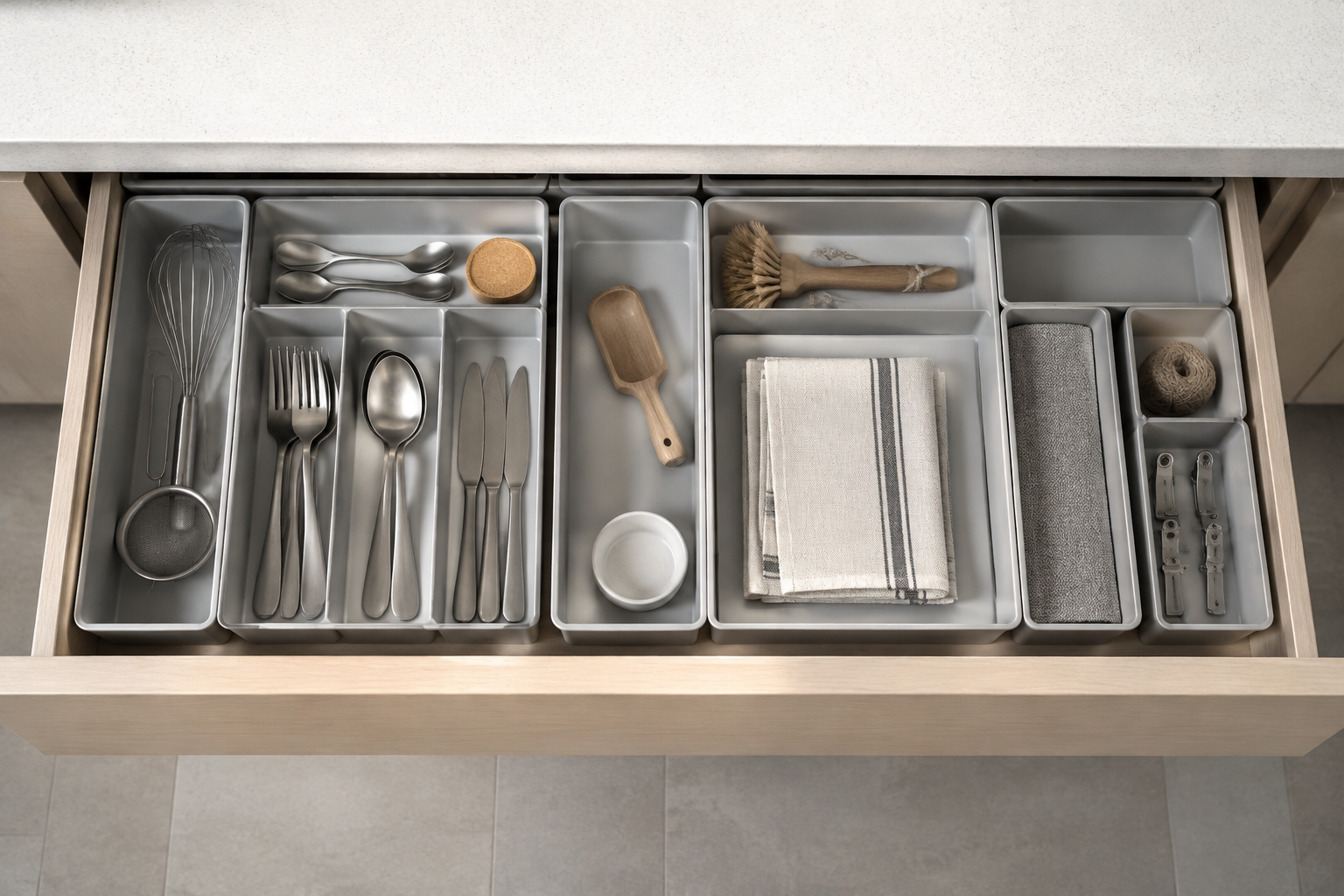
Start with a clear size ladder instead of many near-identical rectangles. A compact tray, a medium core tray and a longer or deeper format can solve distinct drawer needs. When several pieces work together, show the buyer and shopper the set logic in catalogue images and pack copy rather than expecting them to infer compatibility.
Compare like with like. A lower unit price can reflect a different material route, component set, pack configuration, carton quantity, or inspection scope. Ask suppliers to show the assumptions behind a quotation and retain the version with the selected option. That record is useful when the approved sample, shipment inspection, and invoice are reviewed later.
| Size-planning item | Buyer question | Evidence |
|---|---|---|
| Core formats | Which drawer tasks need coverage? | Range map |
| Compatibility | Which trays must sit together? | Set layout photo |
| Fit | Which dimensions are critical? | Dimension drawing or measurement record |
| Packing | How are similar pieces identified? | Set and carton reference |
3. Define the product evidence a buyer should see
Specify external footprint, usable internal space where relevant, depth, wall thickness direction if it affects fit, finish, nesting order, corner geometry and any non-slip or divider feature. A small measurement change can make a set feel incompatible, so compare pieces together using the approved version rather than separate photos.
Use the approved sample as a shared reference rather than relying on a product image alone. In practical factory testing, this means checking the visible parts, assembly, fit, moving components, count, and any agreed function against a documented reference. It is better to describe a limited, testable condition than to use a broad marketing claim that cannot be verified.
4. Make sample approval and factory checks specific
Quality checks can include dimensions where fit matters, flatness, edge finish, nesting, stacking or divider fit, color consistency, visible surface and set count. Use the buyer-approved sample to define cosmetic expectations and record which dimensions are nominal versus critical to the product system.
Before goods are complete, agree the inspection timing, the approved product and pack references, the critical functions, visible tolerances, and the action route if a finding needs correction. A factory quality check or third-party shipment inspection can then report against an agreed scope instead of making an improvised judgement on the day.

5. Treat retail packing and export packing as part of the product
Trays often nest well, but they can scuff or shift if their retail and export packs are not controlled. Decide which pieces are sleeved together, how set count is verified, and whether a separator protects visible surfaces. Confirm carton orientation and labels where several similar dimensions ship together.
Ask for a pre-production photo set before mass production is finished: the product in the retail pack, front and back panels, internal protection, barcode area, inner pack, and master carton. This simple record helps product, logistics, and buying teams identify a mismatch while there is still time to correct it.
6. Send a sourcing brief that earns a useful reply
Send DayMild the target drawer use, requested sizes or reference dimensions, preferred set mix, material and color direction, pack format, market and quantity. We can help build an understandable first size ladder for retail review.
A short, honest first brief is enough to start. DayMild can help buyers translate a category idea into a product, packaging, and quality discussion. Browse our home organization products to see relevant formats, then send the destination market, target quantity, preferred delivery window, and the questions your team needs answered.
Frequently asked questions
How many drawer organizer sizes should a retail set have?
Use enough sizes to solve clear drawer tasks while keeping the relationship understandable. A focused ladder is usually easier to shop and source.
What dimensions should be in a drawer organizer brief?
Include external length, width and depth, usable internal dimensions where relevant, nesting relationship and any dimension critical to set compatibility.
Why are nesting checks important?
Nesting affects product storage, carton efficiency, set presentation and the shopper's understanding of how the range works together.
How can I start a homeware sourcing enquiry?
Send DayMild the product category, target market, estimated quantity, pack requirements, timeline, and the most important buying questions. We will help identify the next product, packing, and quality decisions to review.
Conclusion: make the handoff clear before production
Good homeware sourcing is not about asking a supplier to promise everything. It is about defining the product, retail presentation, and inspection evidence that matter for the selected market. The clearer the approved brief, the more useful the quote, sample review, factory testing, and shipment handoff become.
When you are ready, send your requirements with your category, market, and buying priorities. DayMild will respond with relevant product options and the next practical questions.